
Briefly talk about the development trend of UV printers in 2020
The UV printer industry in China has been developing for more than a decade. At present, flatbed printing technology has reached a relatively mature stage. Looking back over the industry's development, the evolution of printhead technology has been one of its defining trends. Most UV printer manufacturers have gradually upgraded their equipment from Epson, Toshiba, and Konica printheads to Ricoh, Seiko, Kyocera, and StarFire printheads, following the continuous technological advancements introduced by Japanese printhead manufacturers. The market has consistently focused on achieving the best balance between four key factors: printing speed, print quality, service life, and overall cost performance.
However, relying primarily on overseas printhead manufacturers to drive product upgrades—while only updating controller boards and software—has proven to be a relatively convenient development strategy with limited investment requirements. Although this approach has allowed manufacturers to improve existing products with relatively low research and development costs, it has also created two significant challenges.
First, many manufacturers have focused primarily on serving existing customer groups instead of investing more resources into expanding UV printing technology into new industries and applications. As a result, the overall growth of the domestic UV printer market has remained relatively slow. At the same time, the industry's operating costs remain relatively high, and whenever market demand weakens, intense price competition often follows.
Second, the technological gap between domestic manufacturers and international UV printer suppliers has gradually widened. From the perspective of product profit margins, imported equipment often achieves gross margins of 80% or even 100%, whereas domestic manufacturers generally consider 30% to be a good result. This situation has also led to undesirable practices within parts of the industry. In order to maintain profits, some companies may reduce equipment quality, refurbish second-hand machines for resale, replace components instead of properly repairing them during after-sales service, or rely heavily on maintenance services as a source of revenue.
Fortunately, over the past two years, a number of UV printer manufacturers have begun exploring new development directions. For example:
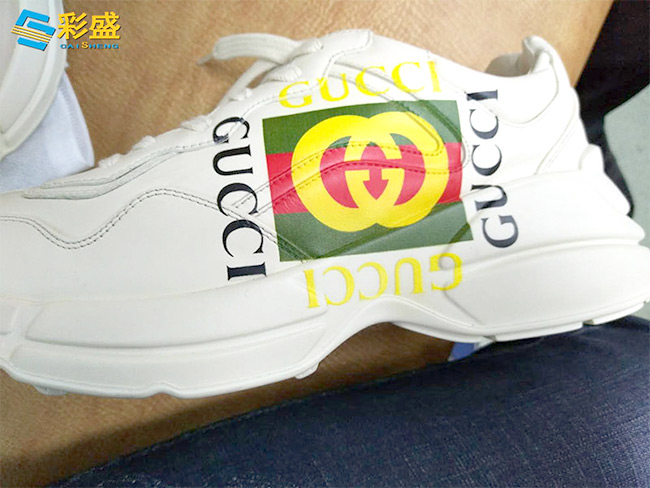
1. Hongsheng Longrun has developed a high-drop shoe printing machine that has already been adopted by several well-known sports footwear manufacturers.
2. Some manufacturers are pursuing higher production efficiency by adopting OnePass printing technology, increasing the number of printheads to significantly improve printing capacity.
3. Others have focused on cylindrical printing applications by developing customized UV printers for products such as wine bottles and insulated tumblers, further expanding industry applications.
4. Some companies are exploring large-format vertical UV printing systems for shipping containers, enabling customized graphics and text to be printed directly onto container surfaces used in international transportation.
5. Others are developing UV printing solutions for conical or irregularly shaped objects, including tapered cups, handled mugs, and similar products.
6. Some manufacturers are integrating UV printers with advanced automation technologies, such as robotic arms, automatic loading and unloading systems, conveyor belts, and UV curing equipment, creating fully automated production lines through secondary system integration.
In addition, several manufacturers are continuing to evaluate and optimize UV printers equipped with Seiko printheads, Ricoh G6 printheads, and other emerging technologies. These innovations are expected to be showcased at upcoming industry exhibitions, demonstrating the continued evolution of UV printing technology and supporting the industry's future growth.


