
What is the difference between the Ricot nozzle and the Epson nozzle?
What are the differences between Ricoh printheads and Epson printheads? Are Ricoh printheads more durable? In recent years, as UV printer technology has continued to advance, an increasing variety of UV flatbed printer models have entered the market, along with different types of printheads. When purchasing a printer, customers are naturally most concerned about print quality and printhead lifespan. Today, let's take a closer look at the differences between the increasingly popular Ricoh printheads and Epson 5th-generation printheads.
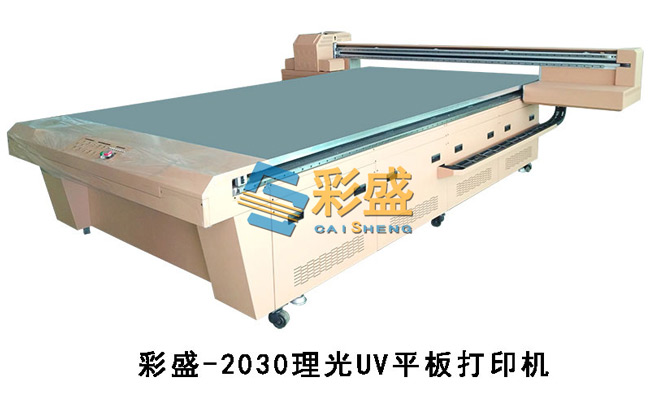
Ricoh currently offers two generations of industrial printheads: the Ricoh G4 and Ricoh G5. Both feature industrial-grade stainless steel piezoelectric printheads with built-in heating and support for 4 to 8 grayscale levels. The Ricoh G4 uses one printhead for each color, while the Ricoh G5 is designed to print two colors with a single printhead. In terms of printing precision, Epson printheads generally provide higher resolution because one Epson printhead can print up to eight colors, whereas Ricoh printheads typically support two colors or dual four-color configurations. However, if you have compared machines equipped with both printheads in person, you will find that UV flatbed printers using Ricoh printheads deliver print quality that is equally impressive. The printed images are fine, uniform, free from banding, and feature smooth, natural color transitions.
Although Epson printheads are well known for their excellent print resolution, they generally offer slower printing speeds and a shorter service life. Under normal operating conditions, an Epson printhead typically lasts between 8 and 10 months, although some users may experience a lifespan of only 3 to 5 months. There are several reasons for this. First, insufficient maintenance can significantly reduce printhead life. Second, some machines use secondary-encrypted printheads. Around 2013, Epson introduced encrypted printheads because many modified inkjet and UV flatbed printers in China were using Epson printheads. While the printheads themselves could not be manufactured domestically, they could be decoded. To limit the large-scale use of modified machines, Epson introduced secondary encryption, and these secondary-encrypted printheads generally have a shorter service life. In addition, Epson printheads are constructed from ABS material, which provides relatively lower corrosion resistance and ink flow performance.
Compared with Epson printheads, Ricoh printheads offer superior corrosion resistance. Their constant-temperature control and circuit heating system minimize the influence of ink temperature and viscosity, making them less susceptible to environmental conditions. They are compatible with a wide variety of inks, produce sharp image quality, ensure smooth ink delivery, and maintain stable performance during continuous operation. With proper maintenance, Ricoh printheads can achieve a service life of up to three years, making them an excellent choice in terms of durability and cost performance.
Finally, we would like to offer one important recommendation. The printhead is the core component of every UV flatbed printer. Regardless of whether you choose a Ricoh, Epson, or any other type of printhead, proper cleaning, maintenance, and regular care are essential. This is the most important factor in ensuring reliable performance, maintaining print quality, and extending the service life of your UV printer.


