
Things you don't know about UV printers
Although UV printers have been widely used in the market for more than a decade, there are still many facts you may not know. Today, let's explore some interesting insights about UV printing technology and expand your knowledge of the industry.
In this context, "UV" refers to ultraviolet curing, known in English as UV Curing or UV Coating. Through a UV lamp, a photochemical reaction instantly cures the ink printed onto an object or material, allowing the printed product to be used immediately after printing. While UV curing is similar to traditional drying processes in purpose, the principle is different. Conventional drying mainly relies on the evaporation of solvents contained in the coating material.
I. Advantages of UV Printers
1. Compared with eco-solvent and solvent-based inks, UV printing provides much better compatibility with a wide range of media. It overcomes the limitations of traditional inks, enabling UV printers to print on more flexible roll materials as well as rigid substrates. This significantly broadens their application range, making UV printers one of the most versatile printing solutions in the industry.
2. UV roll-to-roll printing enables true plate-free digital printing. Whether producing a single item or a large batch, the unit cost remains consistent, making it an economical and efficient solution for short- and medium-run production.
3. By precisely controlling ink droplet size and placement, UV printers deliver ink accurately and evenly, producing high-resolution, full-color images while reducing ink consumption and improving overall printing efficiency.
II. Applications of UV Printers
UV printers can print not only on paper and cardboard but also on a wide variety of printable materials, including low-absorption and non-absorbent substrates such as plastics, films, metals, heat-sensitive materials, and flexible roll media. Their versatility has led to widespread adoption across many industries.
Typical applications in the advertising industry include acrylic, PVC, stainless steel, galvanized steel sheets, aluminum alloy, aluminum composite panels, two-color engraving sheets, foam PVC boards, solid wood, ceramic tiles, as well as 3M vinyl, soft film, mesh banner fabric, transparent film, artistic canvas, PET backlit film, and many other rigid and flexible materials.
III. Differences Between UV Printers and Conventional Large-Format Printers
The main differences are as follows:
Conventional large-format printers are primarily used in the advertising industry and are mainly designed for flexible or roll media. They cannot produce 3D embossed or textured printing effects.
A UV printer, more specifically a UV flatbed printer, is designed primarily for flat materials. It can print directly onto virtually any flat substrate and is capable of producing customized 3D embossed and textured printing effects.
Compared with conventional large-format printers, UV printers offer a much wider range of printable materials and significantly superior printing effects.
IV. UV Printer Application Showcase
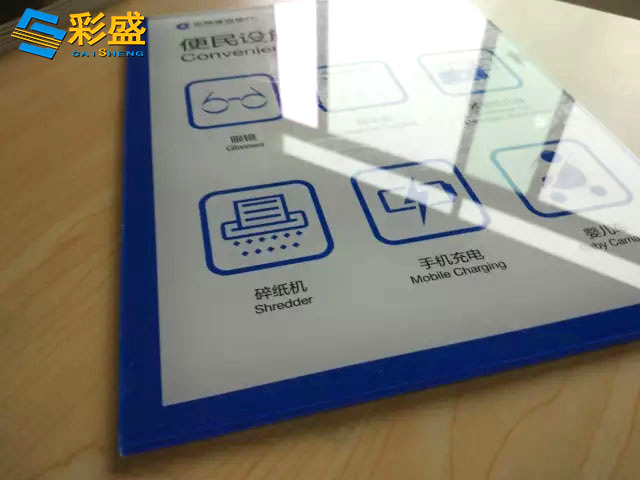
Acrylic UV Printing
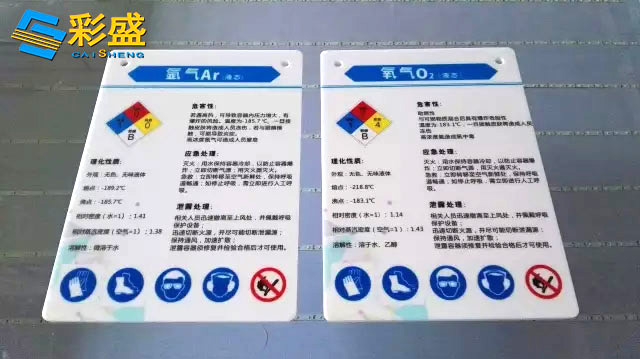
Acrylic UV Printing


